
Project Info
Category
Date
Green Habit Literacy Program for Kids and Teens (GHIP)
The crisis isn’t just melting ice caps, it’s erasing context.
Walk into most African classrooms today, and you’ll find climate lessons built for a world that doesn’t exist here. Textbooks show polar bears on shrinking glaciers while children outside watch their rivers shrink from drought. Worksheets calculate carbon footprints of cars, while families walk 5km for water.
This isn’t education. It’s ecological erasure.
At Green Vault International, we refuse to let Africa’s children inherit a crisis they didn’t create armed only with solutions that ignore who they are. That’s why we built the Green Habit Literacy Program (GHIP): where climate action grows from their soil, their stories, and their power.
Our Main Goals
Why “Culturally Rooted” Literacy Changes Everything
Climate change hits hardest where wisdom is dismissed. For decades, top-down programs parachuted in foreign curricula, treating African youth as empty vessels to fill not changemakers to ignite.
GHIP flips the script:
✨ No more polar bears. In Kumasi, children learn watershed science through Ashanti nsaa (proverbs) about rivers. In Lagos, Yoruba water spirits (Oshun) teach mangrove restoration.
✨ Grandmothers as lead scientists. Elders share how to read wind patterns in palm fronds or predict rains from ant behavior, then students test these insights with low-cost sensors.
✨ Waste becomes wonder. In Accra’s Jamestown slum, teens upcycle plastic bags into woven mats while calculating how much landfill methane their art prevents.
How It Works: From Stories to Systems Change
GHIP isn’t a curriculum, it’s an ecosystem. Designed with 200+ teachers, elders, and youth across Ghana, Nigeria, and South Africa, it meets children where they are:
Ages 2–6: Earth as Playmate
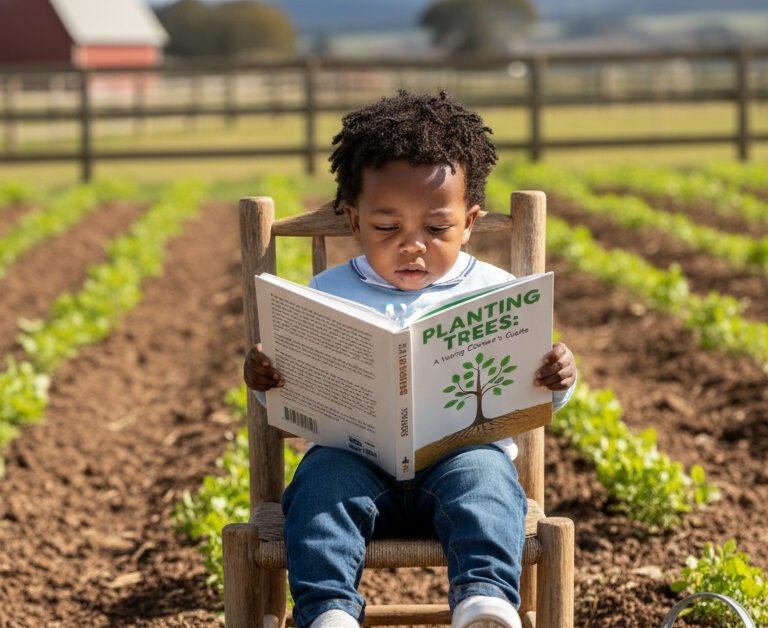
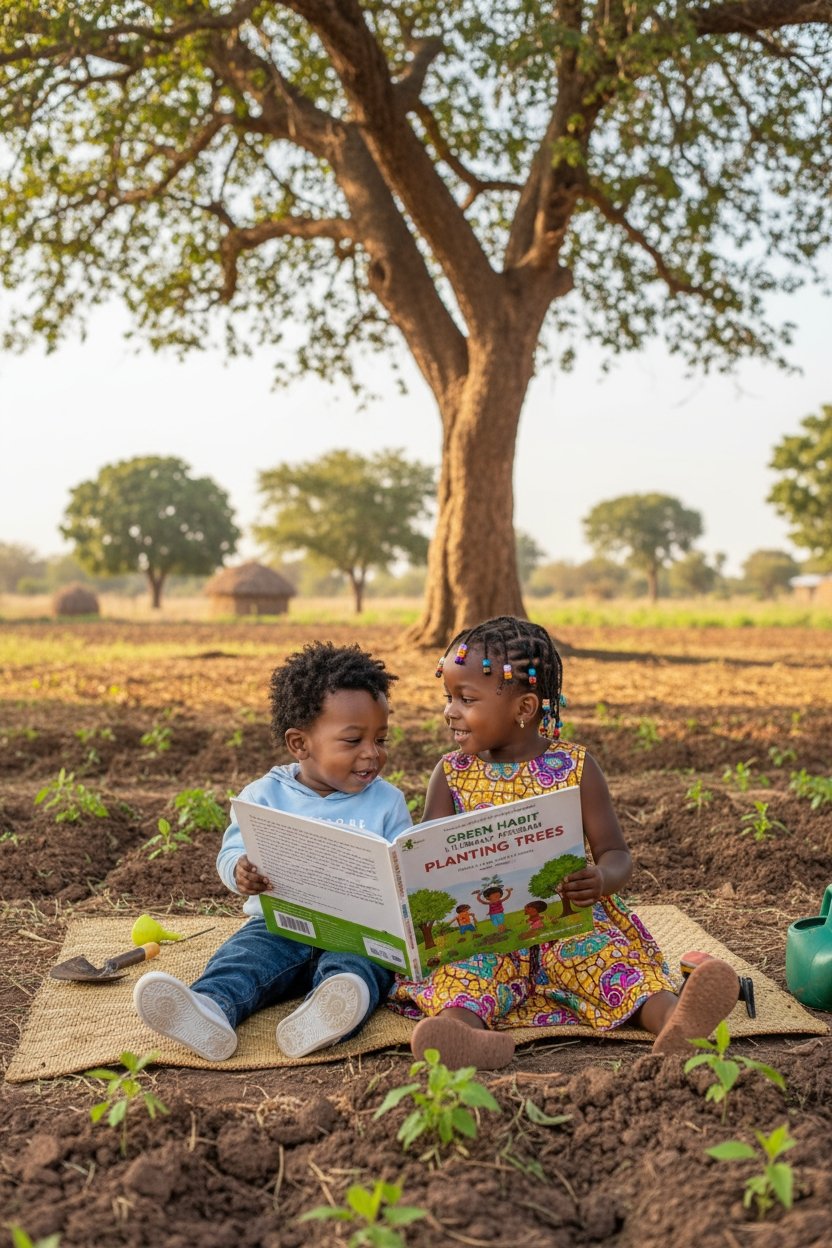
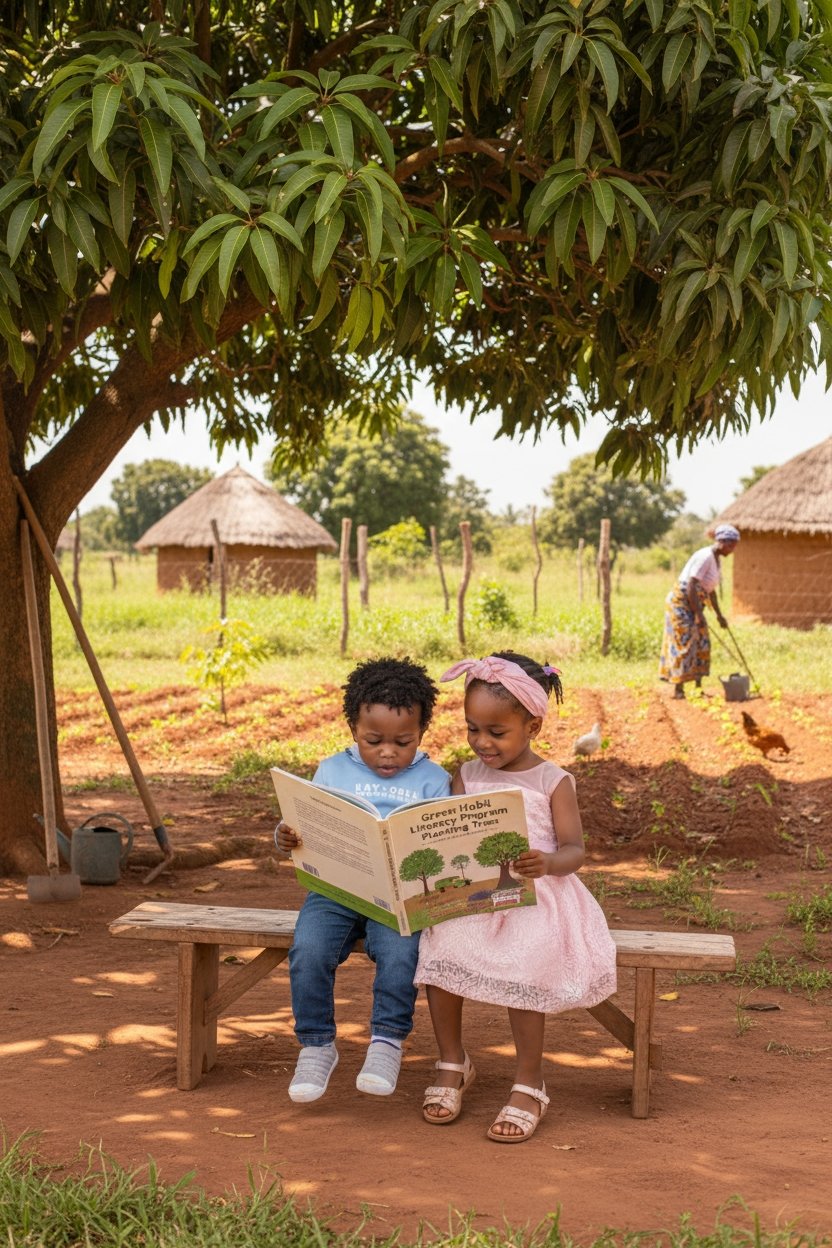
- Sensory gardens where toddlers taste edible weeds (like kontomire), trace leaf veins, and sing rain-calling songs.
- “Waste-free snack time” with reusable calabash containers, teaching circular rhythms before plastic habits form.
Ages 7–12: Stewards of Home
- Community mapping: Kids document neighborhood biodiversity using hand-drawn maps, identifying “cool zones” under baobabs vs. heat islands of concrete.
- Seed libraries: They save heritage seeds (millet, Bambara groundnut) in decorated tins, learning food sovereignty through taste.
Ages 13–15: Changemakers in Action
- Green micro-business labs: Teens in Tamale built a biogas digester from discarded tires to power their school’s lights, funded by selling compost to local farms.
- Policy storytelling: GHIP graduates will be testifing before Ghana’s Parliament on plastic bans, using data from their “trash audits” of Accra markets.
2
The Ripple: When Children Lead, Communities Transform
In just 18 months, GHIP has sparked a quiet revolution:
✅ children trained across several schools, 42% from communities previously excluded from climate conversations.
✅ Youth-led project: “Mud-to-Murals” initiative (using soil art to mark flood zones) a ” network program reviving drought-resistant crops.
✅ Teachers report students now initiate environmental actions at home, like convincing families to replace charcoal with coconut husk briquettes.
<hr size=2 width=”100%” align=center>
GHIP rejects the savior complex. Our model is built on three non-negotiables:
- No external “experts”—only community co-creation.
- No English-only materials—lessons flow in Twi, Ga, Yoruba, and 5 other local languages.
- No isolated classrooms—every project solves real local problems (water scarcity, waste floods, food deserts).
You can water these seeds:
– Sponsor a Storyteller: $50 funds a GHIP “Culture Kit” (seed packets, elder honorariums, recycled art supplies) for 30 children.
– Share Your Skills: Join our virtual “Skill Swap”, teach digital mapping to teens or learn indigenous soil science from elders.
- Amplify Their Voices: Feature GHIP youth anthologies in your newsletters.
“When you teach a child to love the earth in their mother tongue, you give them roots to stand on and wings to rise.”
— Dr. Afia Mensah.
