Project Info
Category
Date
Kayayei Green Village – KGV
They carry the weight of a broken system on their heads.
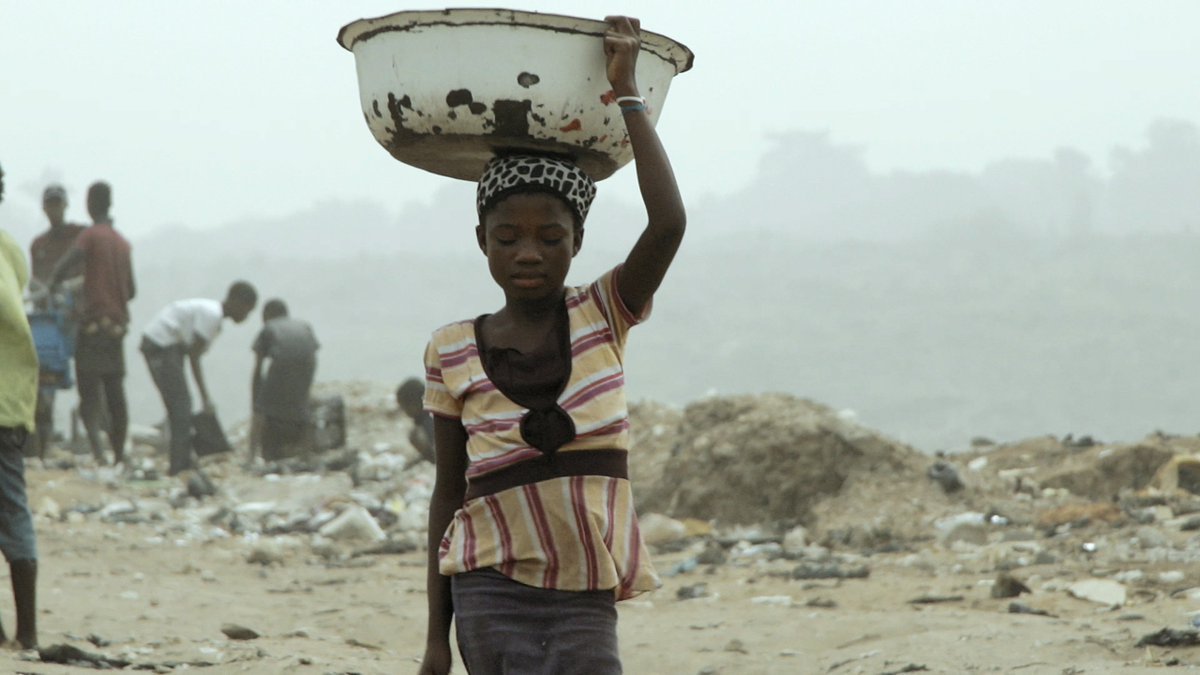
Every morning before sunrise, 9-year-old Adwoa balances a 30kg sack of rice on her skull. Her neck aches. Her spine curves. Her childhood dissolves into market dust. Adwoa is one of Ghana’s kayayei, over 200,000 girls, some as young as 8, condemned to head-porting labor. They’re not “helping families.” They’re casualties of a triple crisis: gender apartheid, climate-driven rural collapse, and policies that see children as invisible.
This isn’t poverty. It’s engineered erasure.
The Unseen Roots of a Crisis
We frame kayayei girls as “child laborers” but that’s only the symptom. Dig deeper:
- Climate collapse dries ancestral farms, pushing families to cities where girls become the “cheapest labor.”
- Gendered neglect treats girls’ education as disposable while boys’ futures are invested in.
- Systemic blindness lets climate funds flow to forests and solar panels—but never to the street where a 7-year-old coughs from charcoal smoke while carrying it.
Result? A girl who carries loads today becomes a mother who can’t read medicine labels tomorrow. Her children inherit the same cracked earth. The same broken cycle.
Our Main Goals
Kayayei Green Village: Not a Shelter—A Revolution
Green Vault International is setting up a living ecosystem of liberation in Accra. Here, healing isn’t metaphorical, it’s rooted in soil, sweat, and sacred dignity.
OUR VISION AND PLANS, IN 3 Phases
Phase 1: Unburdening Bodies, Unbinding Spirits
- Trauma-informed arrival: No intake forms. No interrogations. First touch: a warm bath, a meal cooked by former kayayei women, a private room with a locked door, many girls’ first experience of safety.
- Body reclamation: We shall have Physiotherapists that will her in reversing spinal damages with the girls. Psychologists use art and drum circles to heal shame.
Phase 2: Education as Resistance
Forget classrooms that replicate market hierarchies. At KGV:
- Literacy through agency: Our Girls will be learning math by pricing cocoahusk crafts they make. Science happens in our agroforestry plots, measuring how moringa purifies water.
- Green skills and economic power: They master waste-to-wealth techniques: turning discarded cocoa husks into fuel briquettes, weaving plastic waste into market bags sold to eco-conscious brands.
- Cultural reclamation: Elders teach Ga water songs and Ashanti proverbs about girl-child value—erasing the lie that “education is wasted on daughters.”
2
Phase 3: Circles, Not Ladders
KGV’s genius? It pays for itself while paying girls forward.
The Cocoahusk Collective:
we shall be setting up a collective, with will be on-campus, a micro-factory transforms 10 tons of cocoa waste monthly into:
- – Bio-briquettes sold to Accra restaurants (replacing toxic charcoal)
- – Designer bags from husk fiber, stocked in Parisian boutiques
→ 70% of profits fund KGV operations. 30% goes directly to the girls as wages.
You can carry hope with them:
– Sponsor a Sister: $150/month covers education, healthcare + seed capital for her green enterprise.
– Invest in Husk Tech: Fund a solar-powered briquette press ($1,800). 20 girls operate it. ROI: 100% community ownership.
